The Versatility of USB-C: A Comprehensive Guide
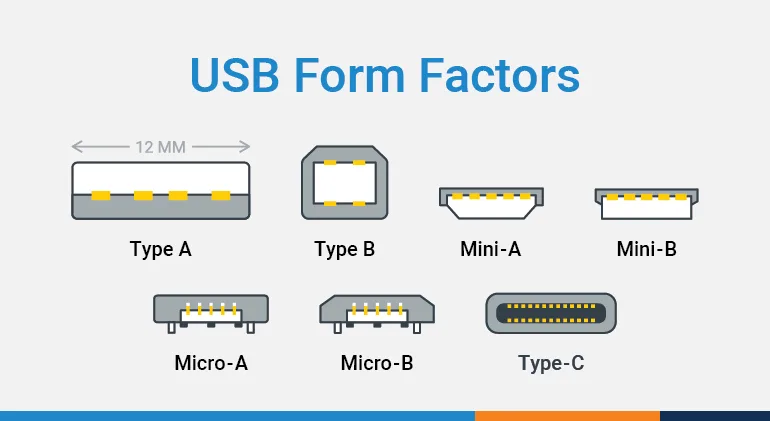
The USB-C connection has rapidly become the gold standard for data transfer and charging across a wide range of electronic devices. Unlike its predecessors, which often had limited compatibility, USB-C is a versatile solution that can be found in smartphones, laptops, tablets, and even peripherals like printers and external hard drives. The key benefits of USB-C include its reversible design, allowing users to connect cables in either orientation, and its ability to deliver higher power levels and faster data transfer rates. For instance, a USB-C connection can support data transfer speeds of up to 40 Gbps, making it ideal for tasks like video editing or large file transfers.
Another significant advantage of USB-C is its multifunctionality. With the right adapters, a single USB-C port can replace a multitude of other ports, such as HDMI, VGA, or even Ethernet. This inherent adaptability allows users to declutter their workspaces, making setup easier and more efficient. Many devices now come equipped with USB-C ports exclusively, urging consumers to embrace this technology. As a result, the future of connectivity seems to be centered around USB-C, promising to unify and simplify the user experience across various platforms.
Counter-Strike is a popular team-based first-person shooter game that has captivated gamers since its release in 1999. Players can choose between two opposing teams, terrorists and counter-terrorists, and compete in various game modes. Whether you're looking to improve your shooting skills or just enjoy strategic gameplay, this game has something for everyone. Additionally, if you're interested in enhancing your gaming experience, check out the Top 10 fast chargers for iPhone to keep your devices powered up during intense gaming sessions.
How USB-C Simplifies Your Tech Interactions
The introduction of USB-C has revolutionized the way we interact with technology, offering a universal standard that simplifies our tech experiences. Unlike its predecessors, USB-C connectors are reversible, allowing users to plug in their devices without worrying about orientation. This convenience extends to a wide range of devices, from smartphones and laptops to tablets and peripherals, enabling seamless connectivity. As more manufacturers adopt this versatile format, the necessity for multiple charging cables and adapters becomes obsolete, creating a more streamlined tech environment.
Furthermore, USB-C supports faster data transfer rates and charging capabilities compared to previous USB versions. With its ability to deliver up to 100 watts of power, users can confidently charge larger devices such as laptops alongside their smartphones, all with a single cable. This not only enhances portability by reducing the number of accessories one must carry, but also promotes a cleaner workspace. As we transition towards more advanced technologies, embracing USB-C ensures that our tech interactions remain efficient and hassle-free.
Is USB-C the Future of Connectivity? Exploring Its Advantages
USB-C, short for Universal Serial Bus Type-C, has rapidly emerged as a game-changer in the world of connectivity. As a versatile connector, it offers numerous advantages over its predecessors, which include faster data transfer speeds and the ability to deliver higher power levels. This means that devices can charge faster while also supporting a wider variety of peripherals. Additionally, the reversible design of the USB-C connector eliminates the frustration of plugging in cables incorrectly, making it more user-friendly. With major tech companies increasingly adopting this standard, it is evident that USB-C is paving the way for the future of connectivity.
One of the significant advantages of USB-C is its versatility across devices. Whether it's smartphones, laptops, tablets, or even gaming consoles, the USB-C port serves as a common interface that can simplify our tech ecosystem. For instance, users can connect their laptops to external displays, transfer data between devices with a single cable, and power peripherals like external hard drives without needing multiple connectors. The adoption of USB-C could also lead to a reduction in electronic waste, as fewer types of cables and adapters will be necessary in the market. Overall, USB-C stands out as a future-proof solution, designed to adapt to the ever-evolving demands of technology.